Introduction to Psoriasis and Ayurveda
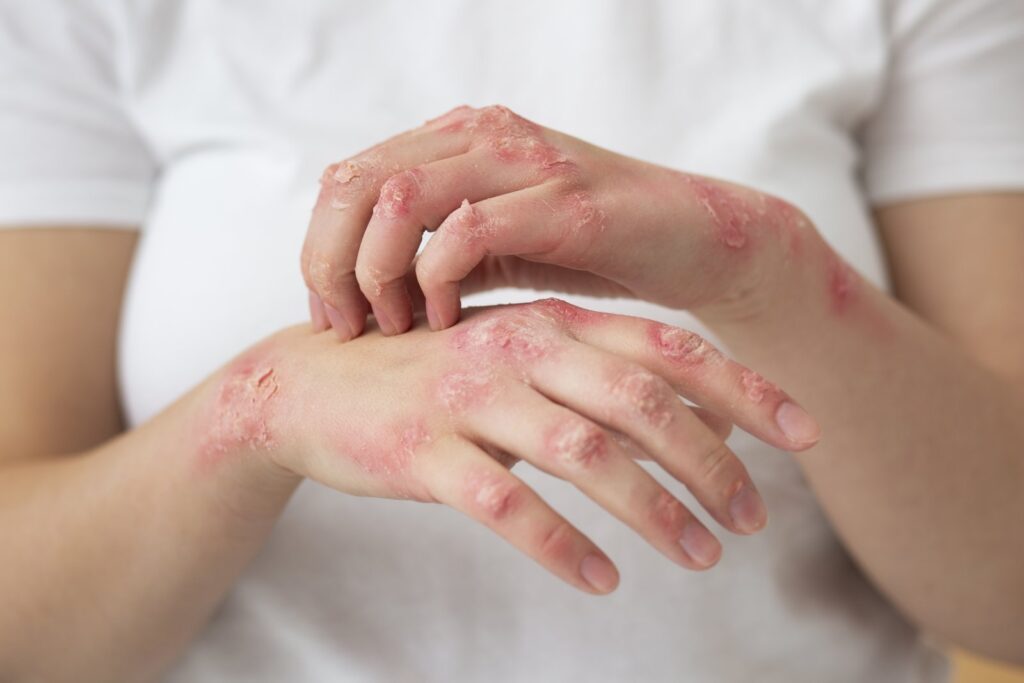
Psoriasis is a long-lasting skin condition. It causes red, scaly patches on the skin. Many people seek natural ways to manage it. Ayurveda, an ancient Indian system of medicine, offers unique insights. In Ayurveda, psoriasis symptoms are seen as signs of deeper imbalances. Understanding psoriasis symptoms in Ayurveda can help you find better ways to manage your health. Moreover, Ayurveda focuses on the root causes, not just the surface signs.
Key Symptoms of Psoriasis According to Ayurveda
Ayurveda describes psoriasis as a type of Kustha, which means skin disease. However, it has its own set of symptoms. Here are some common Ayurvedic symptoms of psoriasis:
Additionally, Ayurveda notes that these symptoms may come and go. Sometimes, they get worse with certain foods or stress. For example, eating spicy or oily foods can trigger flare-ups.
Ayurvedic Perspective: Causes and Dosha Imbalances
According to Ayurveda, health depends on the balance of three energies, called doshas: Vata, Pitta, and Kapha. Psoriasis often involves an imbalance of all three, but mainly Pitta and Kapha. Here are some psoriasis causes in Ayurveda:
Because of these factors, toxins (called ama) build up in the body. As a result, the skin reacts, and symptoms appear. Ayurveda believes that treating the root cause helps control the disease.
Implications of Ayurvedic Symptoms for Health and Lifestyle
Recognizing Ayurvedic symptoms of psoriasis can guide your daily choices. For instance, if you notice more itching after eating certain foods, you can avoid them. Also, understanding your dosha type helps you choose better routines. Since Ayurveda sees the skin as a mirror of inner health, these symptoms may signal deeper issues. Therefore, making small changes in diet and lifestyle can improve both skin and overall well-being.
Ayurvedic Guidance for Managing Psoriasis Symptoms
Ayurveda offers several ways to manage psoriasis. These methods focus on balancing doshas and removing toxins. Here are some common approaches:
However, it is important to consult a qualified Ayurvedic specialist before starting any treatment. They can suggest the best plan for your unique needs.
Prevention and Lifestyle Tips from Ayurveda
Ayurveda believes that prevention is better than cure. Therefore, following simple lifestyle tips can help reduce flare-ups:
In addition, regular check-ups at Ayurvedic clinics can help track your progress. Some cities offer specialized Ayurvedic clinics for psoriasis management.
When to Consult an Ayurvedic Specialist
If your symptoms don’t improve with home care, it’s time to seek professional help. You should consult an Ayurvedic specialist if:
Early guidance can prevent complications and improve outcomes. At Arogyavardhini Ayurvedic Clinic, Dr. Vishnu Priya provides personalized Ayurvedic treatment plans tailored to your needs. Consult us for expert care in managing psoriasis naturally.