What is Panchakarma?
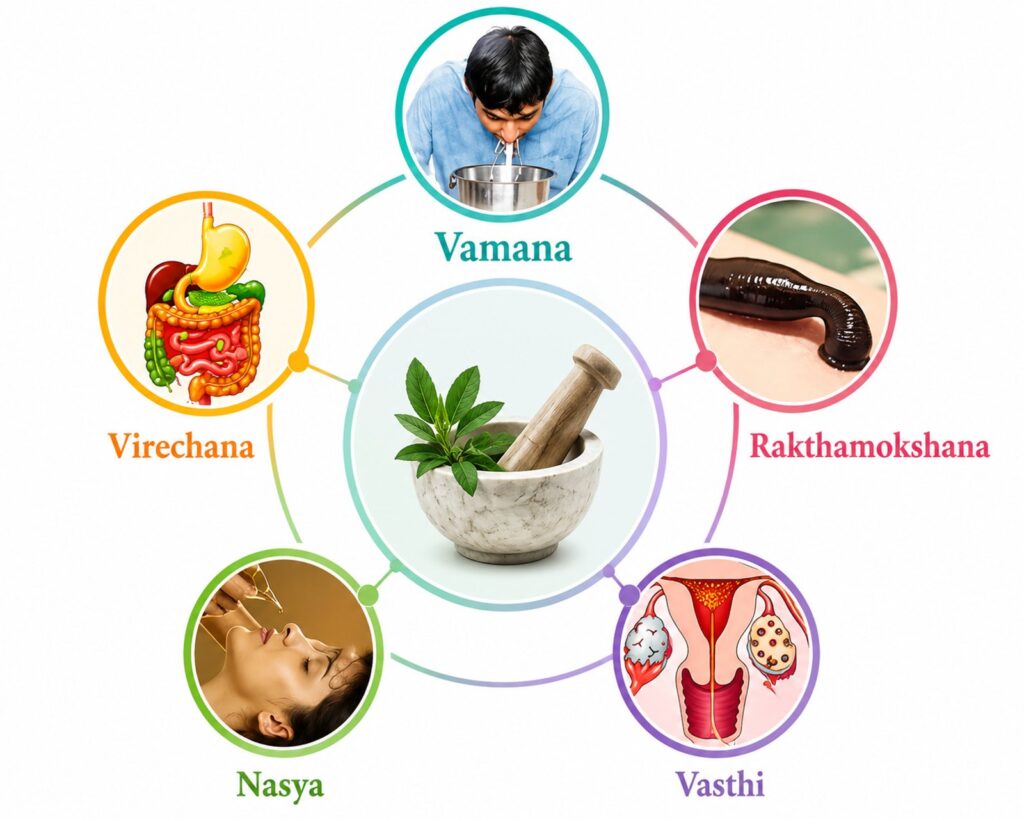
Panchakarma is a set of traditional Ayurvedic detox therapies. It aims to cleanse the body and mind. The term “Panchakarma” means “five actions” in Sanskrit. These five actions are the main types of panchakarma used in Ayurveda. Each method helps remove toxins and restore balance. Many people seek these Ayurveda cleansing methods for better health and well-being.
Why is Panchakarma Important in Ayurveda?
Ayurveda believes that toxins can build up in the body over time. Because of this, you may feel tired, sick, or out of balance. Panchakarma procedures help remove these toxins. As a result, your body can heal and work better. Many experts say that regular cleansing supports a healthy mind and body. In India, Panchakarma is often used to prevent illness and boost energy.
The Five Main Types of Panchakarma
There are five main types of Panchakarma. Each one uses a different method to cleanse the body. Let’s look at each type, how it works, and who may benefit most.
1. Vamana (Therapeutic Vomiting)
What it is: Vamana is a controlled process that helps the body remove extra mucus and toxins through vomiting.
How it works: First, you follow a special diet and take herbal medicines. Then, under a practitioner’s care, vomiting is induced to clear the stomach and chest.
Key benefits: This method may help with allergies, asthma, and skin problems. It can also improve digestion and breathing.
Who may benefit most: People with excess mucus, frequent colds, or certain skin issues may find Vamana helpful.
2. Virechana (Purgation Therapy)
What it is: Virechana uses herbal laxatives to cleanse the intestines and liver.
How it works: After a gentle preparation phase, you take special herbs that cause gentle bowel movements. This helps remove toxins from the digestive tract.
Key benefits: Virechana may help with digestive issues, skin diseases, and liver problems. It can also support weight loss.
Who may benefit most: People with constipation, skin rashes, or liver concerns may benefit from this therapy.
3. Basti (Medicated Enema)
What it is: Basti is an enema therapy using herbal oils or decoctions.
How it works: The practitioner gently introduces herbal liquids into the colon. This helps flush out toxins and balances the body’s systems.
Key benefits: Basti is known to help with joint pain, arthritis, and digestive problems. It also supports nervous system health.
Who may benefit most: People with chronic constipation, joint pain, or nervous system issues may find Basti useful.
4. Nasya (Nasal Cleansing)
What it is: Nasya involves applying herbal oils or powders into the nose.
How it works: The practitioner gently puts drops of oil or herbal mixtures into your nostrils. This helps clear the head and sinuses.
Key benefits: Nasya may relieve headaches, allergies, and sinus problems. It can also improve mental clarity.
Who may benefit most: People with sinus issues, headaches, or memory problems may benefit from Nasya.
5. Raktamokshana (Bloodletting)
What it is: Raktamokshana is a controlled process to remove a small amount of blood.
How it works: The practitioner uses special tools or leeches to draw out blood. This helps remove toxins from the bloodstream.
Key benefits: This therapy may help with skin diseases, high blood pressure, and certain joint problems.
Who may benefit most: People with chronic skin issues or blood-related problems may find Raktamokshana helpful.
Safety, Contraindications, and Considerations
Panchakarma should always be done under the care of a trained Ayurvedic practitioner. Some therapies may not be safe for everyone. For example, pregnant women, children, or people with certain health conditions should avoid some procedures. Always tell your practitioner about your health history. Because each person is different, the right therapy will depend on your needs. According to Ayurveda journals, safety is a top priority during all Panchakarma procedures.
How to Prepare for Panchakarma
Proper preparation helps you get the most from Panchakarma. Here are some steps to follow:
Consult a qualified Ayurvedic practitioner first.
Follow a light, simple diet for a few days before starting.
Avoid heavy, fried, or processed foods.
Drink plenty of water to stay hydrated.
Get enough rest and avoid stress if possible.
Because each person is unique, your practitioner may suggest other steps. In India, many Panchakarma centers offer special guidance for visitors.
Frequently Asked Questions about Panchakarma Types
Is Panchakarma safe? When done by a trained expert, Panchakarma is generally safe. However, it is not for everyone. Always check with your doctor first.
How long does Panchakarma take? The full process may last from a few days to several weeks. The length depends on your health and the type of therapy.
Can I do Panchakarma at home? Some simple steps can be done at home, but full Panchakarma should be done at a certified center.
What are the main benefits of Panchakarma? Panchakarma may help remove toxins, improve digestion, boost energy, and support mental clarity.
Where can I find Panchakarma in India? Many Ayurvedic hospitals and wellness centers in India offer Panchakarma therapies. Always choose a trusted center with qualified staff.
Conclusion
Panchakarma is a key part of Ayurveda cleansing methods. It offers five main types of detox therapies, each with unique benefits. However, it is important to seek expert advice before starting. Consult Dr Vishnu Priya to learn which type of Panchakarma is right for you.